Smartphones have become the Swiss Army knives of modern life, packing a world of technology into a sleek, pocket-sized package. But what’s the magic behind these devices that keep us scrolling, snapping, and streaming? It all boils down to the hardware—the unsung hero that makes everything possible.
Overview Of Smartphone Hardware
Smartphone hardware consists of multiple essential components that contribute to the device’s performance. The central processing unit (CPU) acts as the brain, executing instructions and coordinating tasks. Memory types include RAM for short-term tasks and internal storage for long-term data preservation.
Display technologies significantly enhance user experiences. Liquid crystal display (LCD) and organic light-emitting diode (OLED) panels provide vibrant colors and sharp resolutions. Size variations cater to user preferences, ranging from compact screens to larger displays for multitasking.
Cameras advanced from simple modules to sophisticated systems. Dual-lens and triple-lens setups capture high-quality images, meeting the demands of photography enthusiasts. Enhanced software optimizes photo quality through features like portrait mode and low-light performance.
Battery life plays a critical role in device usability. Lithium-ion batteries commonly power smartphones, offering good energy density and recharge capability. Users often seek models with fast charging and longevity for uninterrupted use.
Connectivity options encompass various technologies. Wi-Fi, Bluetooth, 4G, and 5G capabilities ensure users remain linked to the internet and devices. Manufacturers focus on supporting the latest standards to enhance speed and reliability.
Build materials contribute to overall durability. Glass, metal, and plastic are standard, with some models featuring water and dust resistance. The choice of materials affects weight, aesthetics, and performance under different conditions.
Sensors enrich functionality, enabling features like facial recognition and fingerprint scanning. Acceleration and gyroscope sensors also enhance gaming experiences by detecting device orientation.
Smartphone hardware innovation continues to shape the user experience, driving manufacturers to focus on performance, efficiency, and design.
Key Components Of Smartphone Hardware
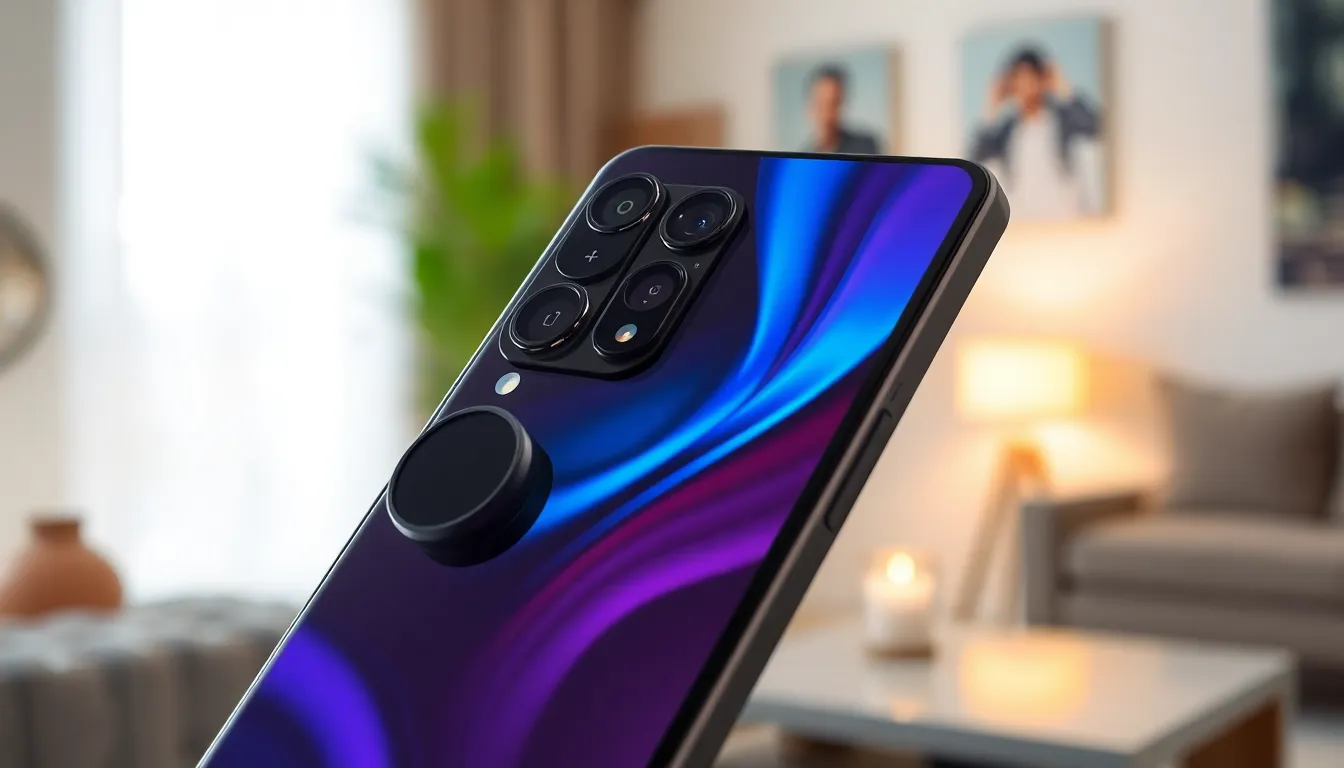
Smartphone hardware includes essential elements that define performance and user experience. Each component plays a crucial role in the functionality of the device.
Processors And Performance
Processors act as the brains of smartphones. They dictate overall device performance and power efficiency. High-performance CPUs, like Qualcomm Snapdragon and Apple A-series, enable seamless multitasking and app management. These advanced processors also support complex applications, enhancing gaming experiences. Multi-core architectures allow devices to handle intensive tasks effectively. Additionally, graphics processing units (GPUs) work alongside CPUs to render high-quality visuals in games and videos.
Memory And Storage Options
Memory and storage significantly affect smartphone operations. Random Access Memory (RAM) impacts multitasking capabilities, enabling smooth transitions between applications. Devices typically feature 4GB to 12GB RAM, depending on the market segment. Internal storage varies from 64GB to 1TB, accommodating users’ needs for apps, photos, and videos. Some smartphones offer expandable storage through microSD cards, further enhancing flexibility. Faster storage technologies like UFS improve data read and write speeds, facilitating quicker app launches and system responsiveness.
Display Technology
Display technology creates vibrant user experiences. LCD and OLED panels dominate the market, each offering distinct advantages. OLED displays deliver deeper blacks and superior contrast, appealing to media consumers. In contrast, LCDs provide reliable brightness and energy efficiency at lower costs. Screen resolutions, such as Full HD and 4K, ensure crisp visuals for gaming and streaming. Additionally, refresh rates influence user interactions; higher rates offer smoother scrolling and reduced motion blur. Smartphones also incorporate various protective technologies, such as Gorilla Glass, enhancing durability.
Battery Life And Management
Battery life remains a vital consideration in smartphone usability. Lithium-ion batteries deliver substantial energy density, facilitating long usage times between charges. Most smartphones feature capacities between 3,000mAh and 5,000mAh, catering to diverse user needs. Fast charging capabilities ensure quick power replenishment, allowing users to maintain productivity. Energy-saving modes improve battery longevity during critical situations. Advanced battery management software optimizes power consumption, maximizing operational efficiency.
Trends In Smartphone Hardware
Smartphone hardware evolves rapidly, driven by innovations that enhance user experiences. Notable trends include advancements in material technology and innovations in camera systems.
Advancements In Material Technology
Manufacturers focus on using lighter materials to improve durability without sacrificing performance. Glass and aluminum alloys emerge as popular choices for premium devices, providing enhanced aesthetics and protection. Recent developments incorporate Gorilla Glass Victus, which offers increased scratch resistance and drop performance. Plastic remains relevant for budget-friendly models due to its lightweight features and cost-effectiveness. Additionally, materials like ceramic feel more premium and offer superior protection in flagship models. Implementing sustainable practices, some companies utilize recycled materials, appealing to eco-conscious consumers.
Innovations In Camera Systems
Camera systems see continuous enhancements, driven by user demand for high-quality photography. Dual and triple-camera setups now dominate the market, allowing for versatile photography options, including wide-angle and macro capabilities. Recent trends include the integration of AI technology that optimizes image processing and enhances low-light performance. Optical Image Stabilization (OIS) improves video and photo clarity, making it easier to capture sharp images on the go. Additionally, emerging features like under-display cameras offer potential for seamless designs while retaining powerful photography capabilities. Brands focus on incorporating advanced sensors to support high-resolution imaging, pushing the limits of mobile photography.
Impact On User Experience
Smartphone hardware directly influences user experience through multiple dimensions. High-performance CPUs like Qualcomm Snapdragon and Apple A-series processors ensure seamless multitasking and immersive gaming. Various memory types, typically ranging from 4GB to 12GB of RAM, enhance efficiency during intensive tasks. Internal storage options, often between 64GB and 1TB, contribute to overall usability, especially when expandable.
Display technologies matter significantly for media consumption. OLED panels, with their vibrant colors and deeper blacks, attract users seeking high-quality visuals. Enhanced resolution impacts viewing enjoyment, making video and photo experiences more satisfying.
Battery life affects daily activities, where capacities between 3,000mAh and 5,000mAh ensure longevity. Fast-charging capabilities minimize downtime, allowing users to stay engaged without interruption. Optimized battery management software further enhances power conservation, which users appreciate during extended use.
Connectivity options, including Wi-Fi, Bluetooth, 4G, and 5G, ensure smooth interactions with the digital world. Advanced connectivity features enable real-time communication, streaming, and online gaming. Build materials also play a role in user perception of device quality; glass and metal offer premium feels, while quality plastic can still provide durability in budget models.
Sensors enrich functionality and appeal to users interested in innovative features. Facial recognition provides quick device access, while gyroscopes enhance gaming experiences. Camera systems, particularly dual and triple-camera setups, cater to diverse photography preferences. Users seeking better image quality benefit from AI integration for low-light performance and Optical Image Stabilization.
Overall, hardware innovations drive smartphone enhancements, shaping how users engage with their devices. Prioritizing performance, efficiency, and design remains crucial in the ever-evolving landscape of smartphone technology.
Smartphone hardware is fundamental to the user experience. It determines how efficiently devices perform and how enjoyable they are to use. As technology evolves manufacturers continue to innovate in areas like processing power display quality and battery life.
These advancements ensure that smartphones remain versatile tools in everyday life. With the integration of AI and improved materials users can expect enhanced functionality and durability. As hardware continues to improve so too will the ways in which individuals connect and engage with the digital world. The future of smartphones looks bright driven by ongoing innovation in hardware design and performance.